Assignment of 3340–3460 MHz Radio Spectrum
RSM is seeking feedback on the proposed approaches to make the 3340–3460 MHz frequency band available for potential use by regional broadband/fixed wireless access, private mobile networks and mobile systems.
Last reviewed: 13 July 2026
The 3340–3460 MHz frequency band is the last portion of unassigned spectrum sitting in the wider 3300–3800 MHz range, which the Government has been considering since 2017. In 2023, assignments were made to:
- regional broadband through spectrum licensing in the 3300–3340 MHz band under Crown management rights (expiring 30 June 2033); and
- national mobile networks and Māori, through management rights in the 3460–3800 MHz band (expiring June 2043).
Although spectrum was intended to be assigned for private mobile networks in this process, this use case has not yet been accommodated in the band.
RSM is seeking feedback on options for the assignment of the 3340–3460 MHz band. This consultation considers the technical parameters and proposed technical limits in this band. The discussion document published below seeks feedback on:
The band assignment structure
Option 1: Nationwide access for regional broadband and private mobile networks
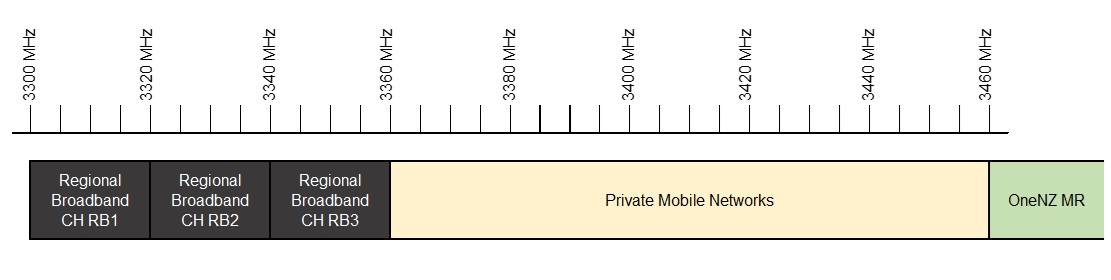
This option provides for an extra 20 MHz for regional broadband nationwide (totalling 60 MHz of spectrum for WISPs in this band), up to 100 MHz for private mobile networks to use nationwide, and no additional spectrum for national mobile networks.
Option 2 (MBIE preferred): Rural access for regional broadband, access for private mobile networks
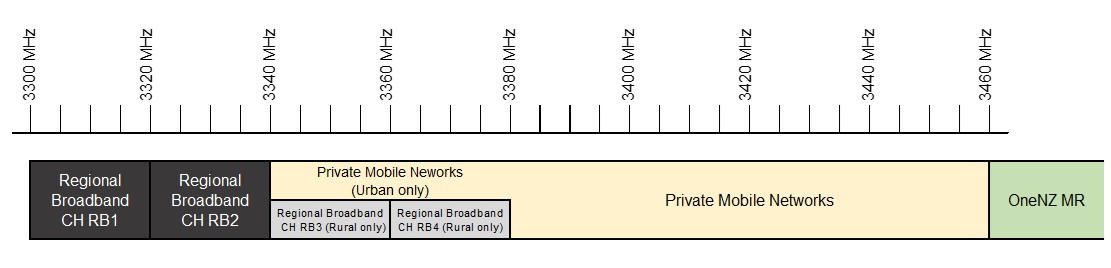
This option provides for an additional 40 MHz of spectrum for regional broadband in rural areas and up to 120 MHz of spectrum for private mobile networks (80 MHz nationwide and with an additional 40 MHz in urban areas). No additional spectrum would be made available to national mobile networks.
Option 3: Rural access for regional broadband, access for private and mobile networks
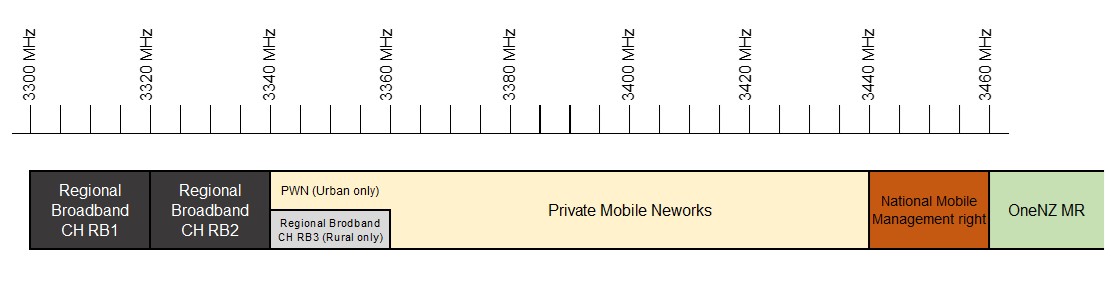
This option provides for an additional 20 MHz of spectrum for regional broadband which will only be available in rural areas, up to 100 MHz of spectrum available for private mobile networks (80 MHz nationwide and with an additional 20 MHz in urban areas), and an additional 20 MHz of spectrum for national mobile networks in a management right.
Spectrum charging
RSM will consider spectrum charging and how this would apply to 3340–3460 MHz along with adjustments that could be made for regional broadband and appropriate charging for private mobile networks.
RSM propose 2 options for spectrum charge for regional broadband:
- Option 1: retain all current settings (status quo).
- Option 2: reduce the per-capita rate to $0.06 (preferred).
RSM also propose a new spectrum charge for private mobile networks. The proposed framework will calculate spectrum charges using bandwidth, geographic area, and StatsNZ population density category. Spectrum charges are a product of the characteristics of a license application and will vary between licenses.
Options identified and analysed by RSM are set out in the discussion document below.
If you have questions about the submission process or the discussion document, email Radio.Spectrum@mbie.govt.nz with the subject line ‘Assignment of 3340-3460 MHz Radio Spectrum’.